What Is a Pressure Transmitter? Working Principle, Types, and How to Select One for Oil & Gas Applications
What Is a Pressure Transmitter? Working Principle, Types, and How to Select One for Oil & Gas Applications
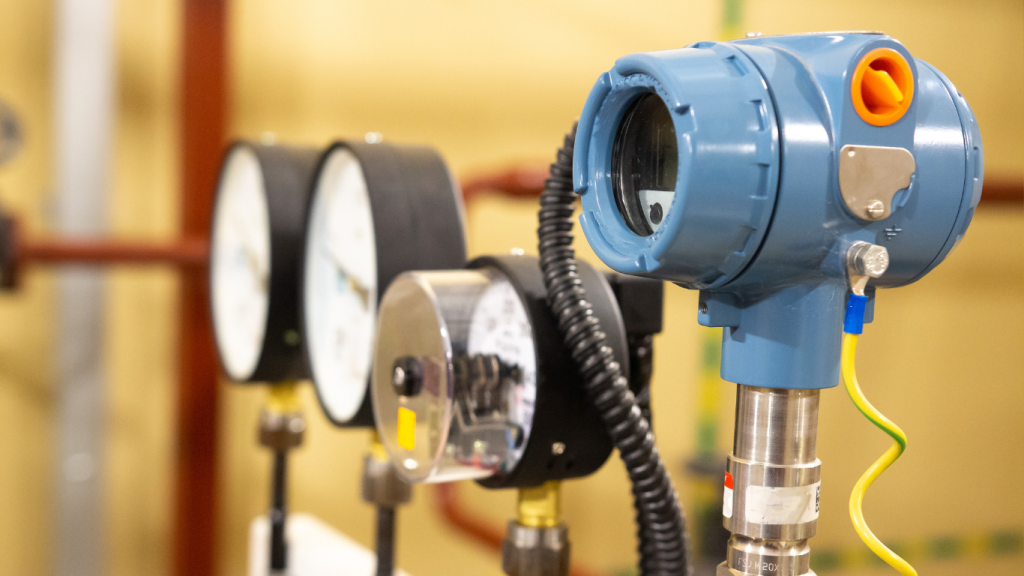
Pressure measurement is an essential part of modern oil and gas operations. From offshore platforms and pipelines to gas processing plants, refineries, and petrochemical facilities, accurate pressure information helps engineers monitor processes, control equipment, and maintain safe and reliable operations. One of the most widely used instruments for this purpose is the Pressure Transmitter. A Pressure Transmitter is an industrial instrument that measures the pressure of a liquid or gas and converts the measurement into an electrical signal that can be transmitted to a control or monitoring system. Unlike a traditional pressure gauge, which provides a local visual reading, a pressure transmitter can continuously send pressure data to systems such as PLC, DCS, or SCADA.
How Does a Pressure Transmitter Work?
The basic working principle of a pressure transmitter is relatively straightforward. Process pressure enters the instrument through a process connection and acts on a sensing element, typically a diaphragm. The sensing element detects changes in pressure and converts them into an electrical signal. The transmitter electronics then process the signal and send the corresponding measurement to the control system. A common industrial output is 4–20 mA, while many modern pressure transmitters also support digital communication such as HART. This allows operators and engineers to monitor pressure continuously and, depending on the system, access additional diagnostic and instrument information.
Types of Pressure Transmitters
Different processes require different types of pressure measurement. The three common types are Gauge Pressure Transmitters, Absolute Pressure Transmitters, and Differential Pressure Transmitters.
- A Gauge Pressure Transmitter measures pressure relative to atmospheric pressure and is widely used for pipeline, pump, compressor, and general process applications.
- An Absolute Pressure Transmitter measures pressure relative to a vacuum reference. It is suitable for applications where atmospheric pressure changes need to be excluded from the measurement.
- A Differential Pressure Transmitter (DP Transmitter) measures the difference between two pressure points. It is commonly used for flow measurement, level measurement, filter monitoring, and measuring pressure drop across process equipment.
How to Select a Pressure Transmitter for Oil & Gas Applications
Choosing the right Pressure Transmitter for Oil & Gas applications requires more than simply selecting a suitable pressure range. Engineers should consider the actual process conditions and installation environment. Important factors include operating and maximum pressure, process temperature, fluid characteristics, wetted materials, required accuracy, process connection, hazardous-area classification, output signal, communication protocol, and environmental conditions.
For offshore applications, additional considerations such as saltwater exposure, corrosion, vibration, limited installation space, and maintenance accessibility can be particularly important. The transmitter should also be compatible with the plant’s existing control and instrumentation system. Selecting an instrument that meets the measurement requirements but cannot be properly integrated into the control architecture can create unnecessary engineering and commissioning challenges.
Why Pressure Transmitters Matter in Oil & Gas
Reliable pressure measurement provides operators with better visibility of the process. Pressure transmitters can help monitor pipelines, pumps, compressors, separators, vessels, and other critical equipment while providing information for process control and alarm systems. More advanced transmitters can also provide diagnostic information and support digitalization strategies, helping engineering and operations teams identify abnormal conditions and improve maintenance decisions. Ultimately, the value of a pressure transmitter is not simply its ability to measure pressure. It is its ability to provide accurate, reliable, and actionable process information throughout the equipment lifecycle.
A Pressure Transmitter is a fundamental component of process instrumentation in the oil and gas industry. Understanding its working principle, different types, and application requirements is essential for selecting the right instrument. For oil and gas projects, the best pressure transmitter is not necessarily the most expensive or technologically advanced option. It is the one that is correctly specified for the process conditions, measurement requirements, safety standards, control system, and operating environment. At Multiphase Oil & Gas, we support oil and gas and industrial applications with process instrumentation, flow measurement, metering systems, valves, and engineered solutions designed around specific application requirements.
HOTLINE:
091-187-1111
EMAIL:
sales@multiphase-og.com
LINE ID:
@multiphase